


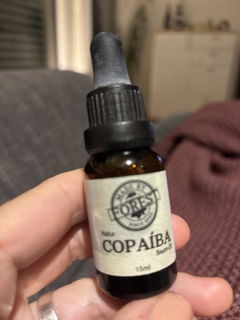
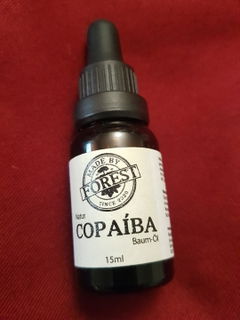
Hilft bei leichten Entzündungen auf der Haut vermengt mit etwas trägeröl oder Creme. Neulich bei einer Entzündung am Bein nach einem Wespenstich angewendet. Die Entzündung war nach 2 Tagen vollständig abgeklungen.
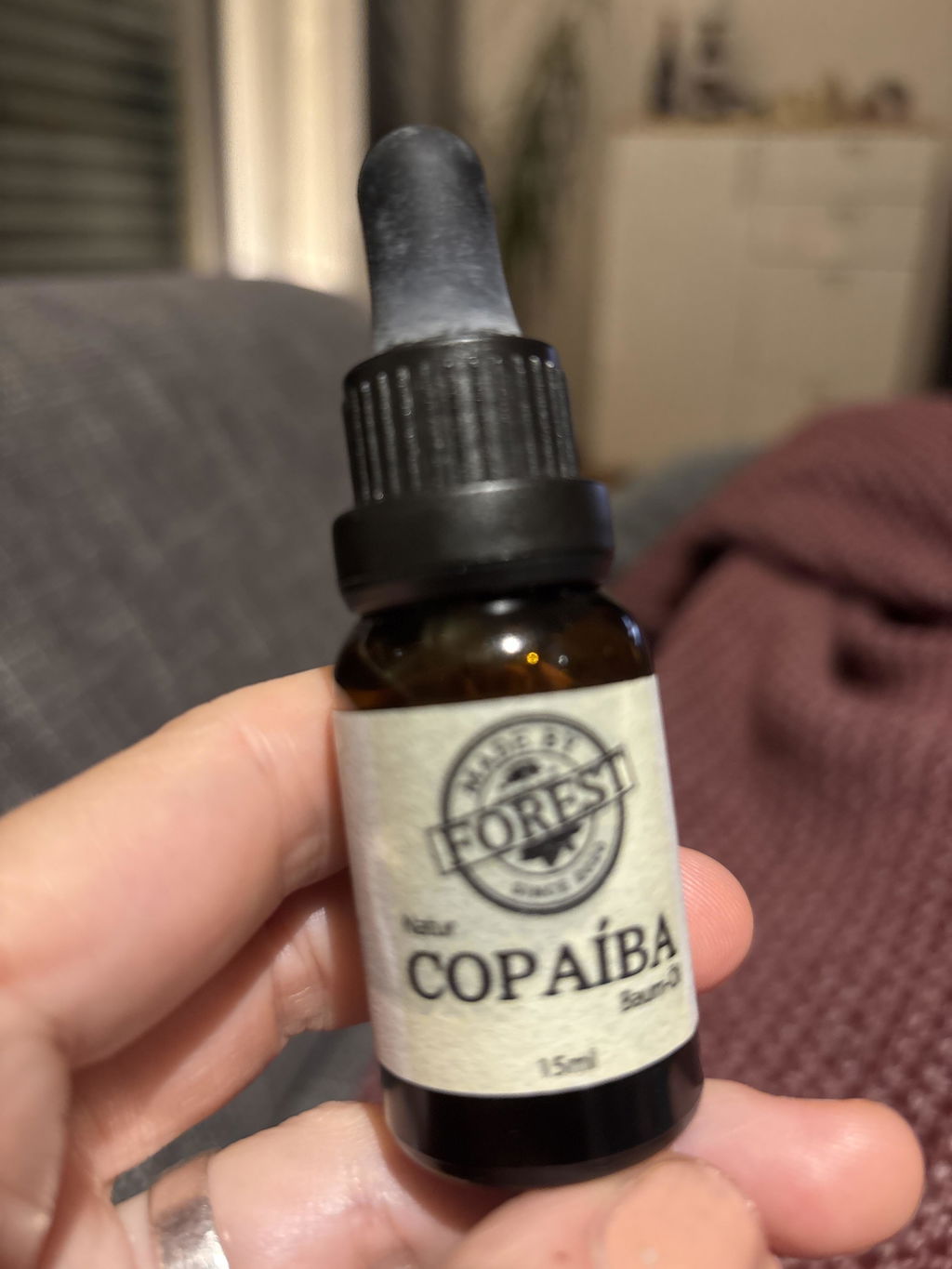
Ich kannte COPAIBA schon aus Brasilien und hatte es dort von einem Straßenhändler als angeblich original von Indigenen hergestellt gekauft . Dieses Öl hat mich beeindruckt und auch befriedigend geholfen z.B. gegen meinen Nagelpilz , aber es brauchte Kontinuität um zu wirken . Als ich jetzt eine Entzündung am Backenzahn bekam und der Zahnarzt sagte das müsse chirurgisch und mit Antibiotika behandelt werden brauchte ich neues und wurde bei MADEBYFOREST fündig . Die Bestellung wurde schnell geliefert und es war nicht viel teurer als in Brasilien . Bei der Anwendung merkte ich jedoch das es sehr viel stärker im Aroma war . Offenbar auch in der Wirkung , denn nach gerade einmal zehn Tagen täglicher Anwendung verschwand der Geruch und der Druck im Kiefer .
Die Untersuchung beim Arzt steht noch an , aber ich bin mir sicher daß es geholfen hat .
Auch wenn ich keinen Vergleich habe (Cobaiba zum ersten mal gerochen), bin ich mit der zügigen Lieferung sehr zufrieden. Das Öl ist zudem über den Direktversand recht günstig und hoffentlich tatsächlich fair produziert.
Geruch: sanft würzig nicht sehr intensiv, aber speziell - wird für Aromatherapie verwendet...
Lieben Dank und viel Erfolg Euch!
Das Päckchen kam gut hier an.
Benutze Copaiba mit DMSO Creme 50% auf entzündete Hautstellen am Handgelenk und den Händen ( atopisches Ekzem ) seit drei Tagen. Die aufgekratzten Stellen sind nicht weg , aber sehen gut geschlossen aus.
Wow! So einen schnellen Versand erlebt man höchst selten. Großes Kompliment.
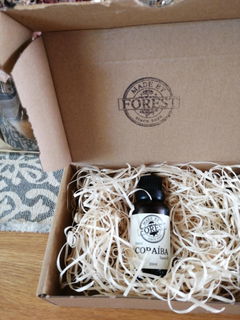
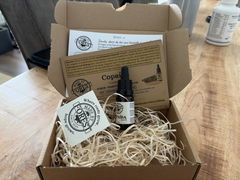
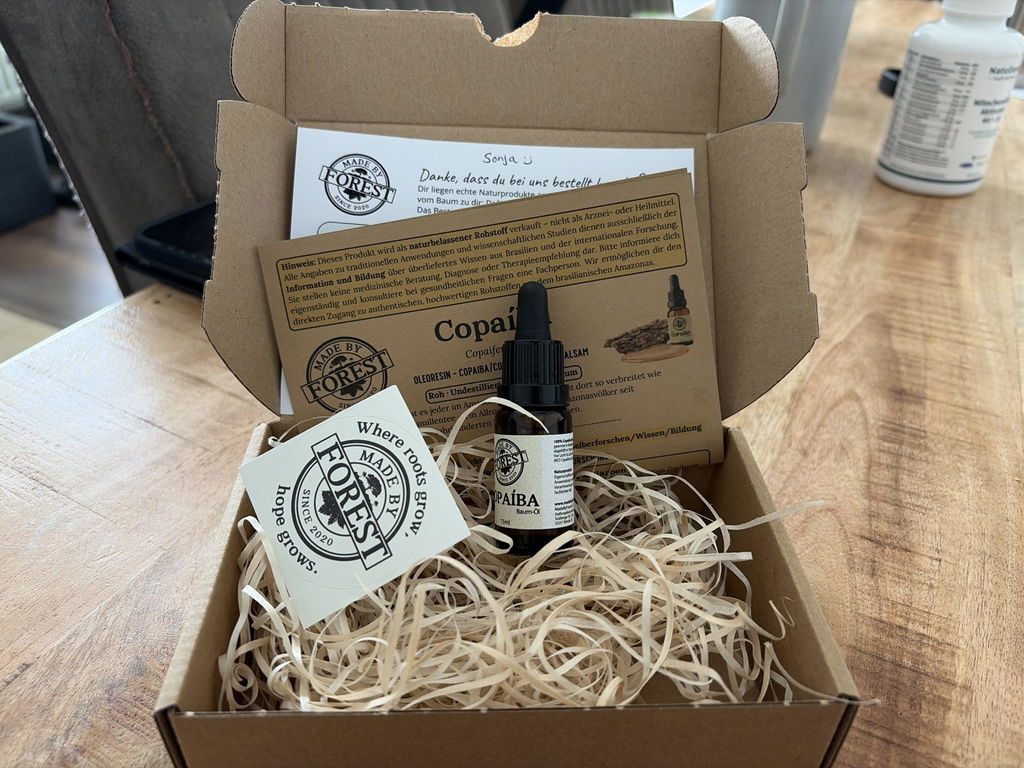
Auch die Verpackung ist vorbildlich. Nicht zu groß und schön mit Holzwolle gesichert. Das Anschreiben sogar mit Namen. Ist zwar nur eine Kleinigkeit, aber ich finde so etwas immer schön persönlich.
Das Öl kommt im Glasfläschchen mit Pipette. Das finde ich großartig. Die meisten Öle haben nur einen normalen Tropfenzähler und ich hasse sie. Entweder es kommt gar nichts oder viel zu schnell. Pipette ist toll. Zur Wirkung kann ich, da heute erst angekommen, noch nichts sagen. Ich habe es auf meine Neurodermitis-Stellen aufgetragen. Pur. Hat nicht gebrannt oder fiel anderweitig negativ auf. Mein Mann hat damit inhaliert, da ihn eine Erkältung plagt. Ebenso mit Honig eingenommen. Ich bin auf die Wirkung gespannt.
Meine Tochter (12) ist total begeistert wie schnell das Öl bei ihrer Akne hilft.
Qualität ist hervorragend.Ein wundervolles Öl, benutze es seit 1 Woche und es bringt mich in ein wohltuendes Gleichgewicht. Gerade in der stressigen und hektischen Zeit. Wer der Lichtgeschwindigkeit im Alltag entgegen wirken möchte, dann ist dieses Öl eine Wohltat für Körper , Geist und Seele. Danke an Euch, das es Euch und dieses Öl gibt. Werde hier erneut bestellen.
Schöne WebSite - schnelle Lieferung - bis auf weitere Produkte gespannt, da das Metier neu für mich ist
Wundervolles Naturprodukt - ich bin total begeistert!
Schöne Verpackung, schnelle Lieferung und ein tolles Produkt! Gut gefallen hat mir auch der schöne "Flyer" dazu, auf dem die benefits sowie mögliche Anwendungen aufgeführt sind.
Genieße das Copaíba jetzt wie vorgeschlagen auch mit einem kleinen Löffel Honig. :)
Zur Langzeitwirkung kann ich zwar noch nichts sagen, aber es fühlt sich sowohl eingenommen als auch extern aufgetragen sehr gut an. Vielen Dank!